
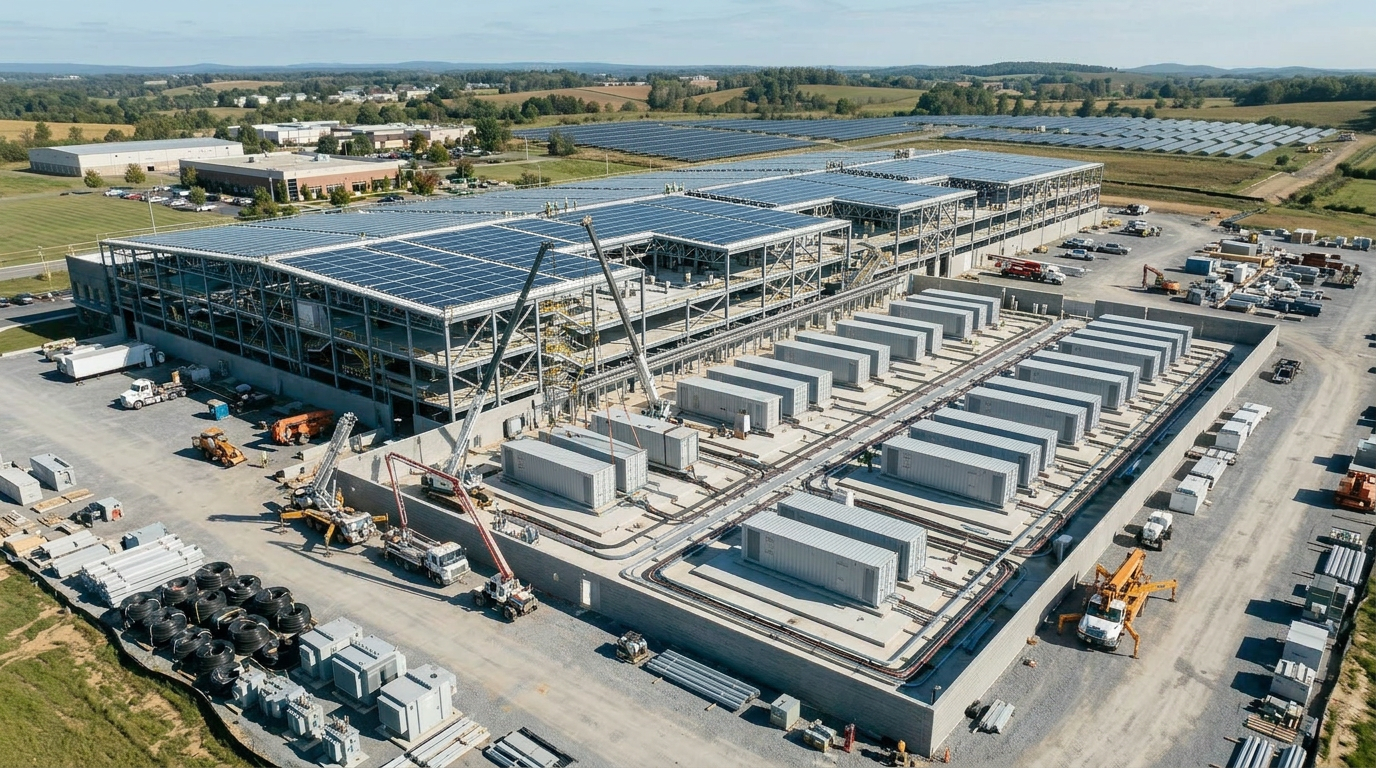
The Financial Evolution of Energy Storage: From Saving to Earning
Stop viewing your battery as a cost. Start viewing it as a revenue-generating asset.

The Journey: From Passive Saving to Active Earning
Most businesses transition through these three stages of energy maturity. Where is your facility today?
📉
Stage 1: Baseline
Solar Generation
You generate your own power to reduce daytime bills. You are reducing costs, but remain dependent on the grid for night-time power.
🔋
Stage 2: Security
Battery Storage (Saving)
You store excess solar for later use and perform Peak Shaving. Your battery is a “savings account”—it reduces your outflow.
💰
Stage 3: Strategy
VPP Integration (Earning)
Your battery connects to a Virtual Power Plant. You sell services back to the grid. Your battery is an “investment account”—it creates new income.
What exactly is a Virtual Power Plant (VPP)?
Turning Distributed Assets into a Unified Power Station.
A Virtual Power Plant (VPP) is a cloud-based network that aggregates hundreds of individual commercial batteries into one coordinated “virtual” utility. Instead of your battery acting in isolation, it becomes part of a larger power plant that supports the National Electricity Market (NEM).
When the grid is under stress, the VPP operator dispatches energy from your system to stabilize the network. In exchange, you receive payments, transforming your infrastructure into an active, income-generating asset.
How the “Earning” Works:
- Wholesale Arbitrage: Buying low (solar peak) and selling high (grid peak).
- Grid Services: Payments for providing stability (FCAS) to the network.
- Capacity Payments: Recurring revenue for being “available” to the grid.
The Technology of Trust: LFP & Tier-1 Selection
Maximum yield requires maximum reliability. We do not compromise on chemistry.
🔋
Mature LFP Chemistry
We exclusively deploy Lithium Iron Phosphate (LFP) technology—the global gold standard for commercial BESS due to superior thermal stability and longer cycle life.
💎
Reputable Manufacturers
We partner only with Tier-1 global manufacturers with proven utility-scale track records and bankable warranties to ensure long-term operational yield.
Comparing the Value Shift
📉
The “Saving” Model
Focus: Reducing Outflows.
Method: Self-consumption & Peak Shaving.
Outcome: Lower monthly electricity bills.
💰
The “Earning” Model
Focus: Generating Inflows.
Method: VPP & Grid Services.
Outcome: New, recurring revenue streams.
VPP & BESS Suitability: Is Your Site a Candidate?
Not every site is optimized for a VPP. We use a strategic audit to identify the highest-yield opportunities.
What makes a site “suitable” for C&I BESS?
Suitability is determined by four primary factors:
- Load Profile: High peak demand charges (spiky loads) see the fastest ROI.
- Solar Surplus: Large arrays generating more power than can be consumed.
- Network Capacity: Support for bidirectional energy flow.
- Physical Space: Safe, accessible space for containers and switchgear.
In which scenarios is a VPP most profitable?
VPPs are most lucrative for:
- High Demand Sites: Manufacturing or cold storage facilities.
- Excess Solar Sites: Warehouses with massive rooftops.
- Critical Infrastructure: Sites requiring backup power that should pay for itself.
How do I know if I should focus on “Saving” or “Earning”?
It depends on your financial goal. If you prioritize stability and predictability, we optimize for “Saving”. If you prioritize asset yield and new revenue, we architect for “Earning”. Most clients use a hybrid approach.
Ready to Move to the “Earning” Phase?
Don’t let your energy assets remain passive. Partner with Elsons to unlock the revenue potential of your facility.
✓ Strategic Audit ✓ Revenue Modeling ✓ Tier-1 Hardware